Learning Centre
Solar Integration
Charging from surplus solar, inverter pairing and home batteries.
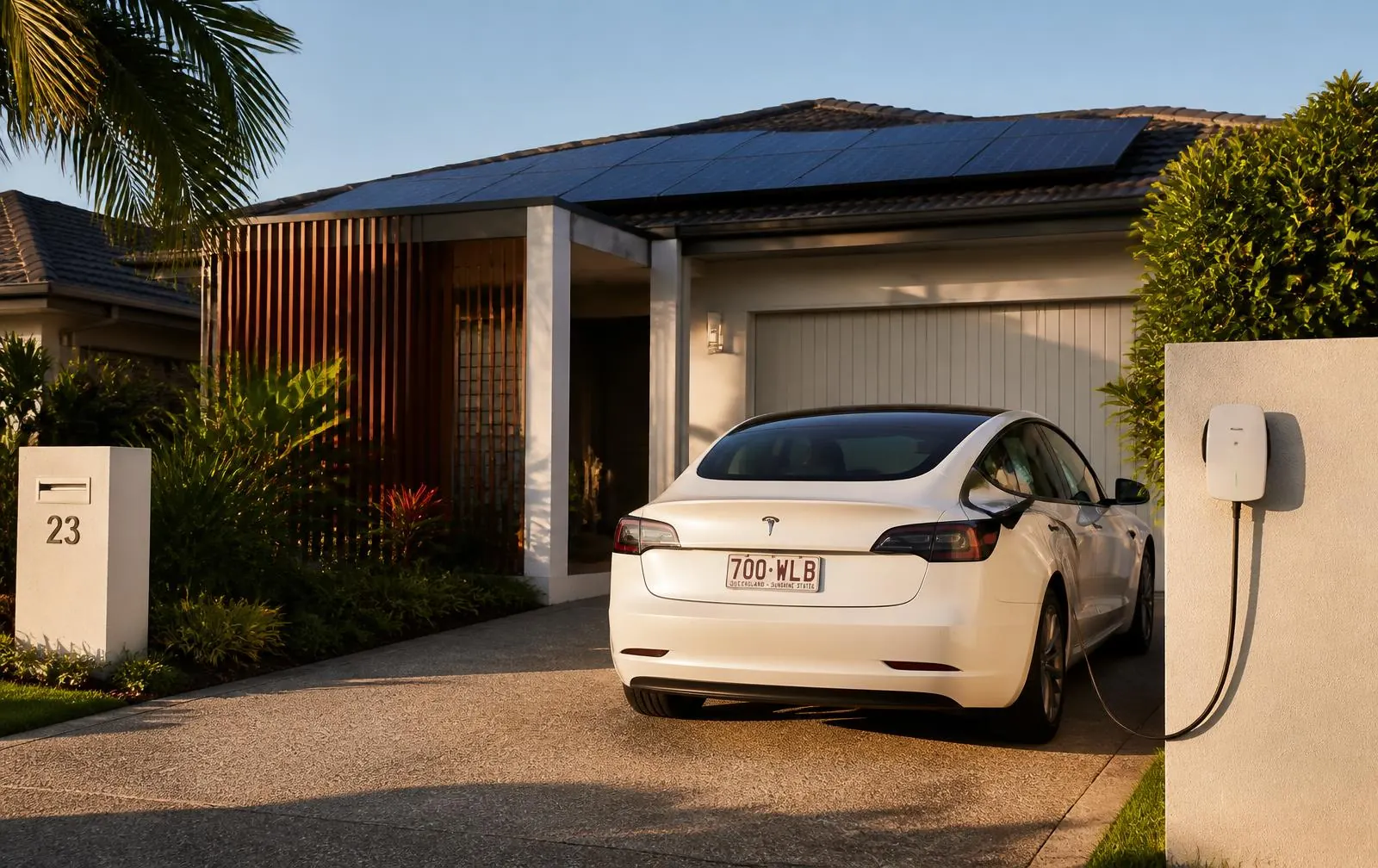
With shrinking feed-in tariffs, charging from surplus solar is the biggest running-cost saving available.
What this topic covers
How surplus diversion works
A CT clamp measures export, and the charger modulates current to match it.
Minimum charging current
Solar-only mode needs roughly 1.4kW of surplus; hybrid modes top up from the grid.
Battery and inverter pairing
Priorities need setting so the car doesn't drain a home battery overnight.
When solar charging does not suit
If the car is away all day, off-peak scheduling usually beats solar diversion.
Key facts
- Feed-in tariffs are a fraction of the retail rate, so self-consumption is worth more.
- Solar diversion needs a CT clamp at the main switchboard.
- A 6.6kW system can cover most of a daily commute on a sunny day.

Ready to install your EV charger?
Get a fixed-price quote from the Sunshine Coast's EV charging specialists.
- Fixed-price quotes
- Licensed Queensland electricians
- Installed to AS/NZS 3000
- Same-day quote turnaround